Davidson Shaft and Coke Works was developed rather early in the original Connellsville Coke Region. It did take some time to reach its heyday of 333 ovens but it operated until its coal was depleted during World War II. The mine, coke works and patch town were developed on the farm of Daniel Rogers Davidson. Davidson was a developer and organizer of the first two railroads to enter Connellsville. The Pittsburgh and Connellsville Railroad which reached Connellsville from West Newton in September 1855. By 1861 the railroad was connected to Pittsburgh and in June 1871 the line connected Pittsburgh with Cumberland, MD. His railroad is still in use today by CSX. He also was a developer of the Southwest Pennsylvania Railroad in 1873, however this railroad was largely funded by the Pennsylvania Railroad and was almost immediately absorbed into its system. Much of this route is used today between Smithfield and Greensburg (Radebaugh) by the new Southwest Pennsylvania Railroad. Although sharing the same name and route the latter railroad wasn't founded until 1995 and is not related to the former. Both of these railroads passed through the Davidson farm which made it prime real estate for coal and coke development.
Around the same time that the Pittsburgh and Connellsville Railroad was completed, Philo Norton and two partners bought some coal lands near the Davidson farm, sank a shaft about 80 feet deep, began making coke in ricks and built four ovens. In 1860 the newly formed Pittsburgh and Connellsville Gas Coal Company built a 40 oven coke plant at the Davidson site. By 1883 there were 296 ovens at Davidson. On October 1, 1888 H.C. Frick Coke Company acquired the coke plant. At this time there were 1,992 acres of coal lands and a 120 foot deep shaft. By 1903 there were 333 ovens and 204 employees.
 |
Daniel Rogers Davidson |
What is odd about Davidson today is how few of those 333 ovens are left. The ovens sit along the modern CSX/Southwest Pennsylvania tracks which, I think, were originally used as a siding for the Davidson Works. The tracks on top of the hill which connected to the 1931 bridge over the Youghiogheny were taken out in the 1970's. It looks like many of the ovens were simply buried when the railroad was expanded to serve as the main branch. The section where the ovens pull away from the tracks is the only area where ovens are visible. Even then the ovens just disappear.
 |
A portion of the 1902 Connellsville Quadrangle topographic map showing the Davidson Works. |
 |
The red line shows where the bank of ovens twisted along the hillside. The only ovens that I could find are located at the end of Connell Ave. on the other side of the tracks. |
 |
A 1939 aerial of the area. You can see the ovens snaking along the hillside below the railroad tracks. They are completely obliterated even in 1939. The Davidson patch is at the top, center left of the photo. Just beyond that you can see part of the Davidson mine complex along the river. I'm not sure if the ovens were used during the war or if the coal reserves were just mined and shipped. |
 |
Postcard showing the Davidson shaft and shaft house. |
 |
Workers from the Pittsburgh and Connellsville Railroad in front of a 4-4-0 American Class locomotive. This locomotive apparently brought the first train into Connellsville in 1855. Daniel Rogers Davidson is standing on the front of the train under the headlight. (Photo courtesy of Around Connellsvile, Paul E. Eckman, Karen Hechler and the Connellsville Area Historical Society, 2013) |
 |
Postcard showing the Davidson coke ovens. The land has been so altered around here. I had a really difficult time trying to piece together how this whole thing worked. |
 |
Another view of Davidson shaft. |
And here's what is left today:
 |
Up on the tracks. Realistically there should be a bunch of coke ovens to the left. |
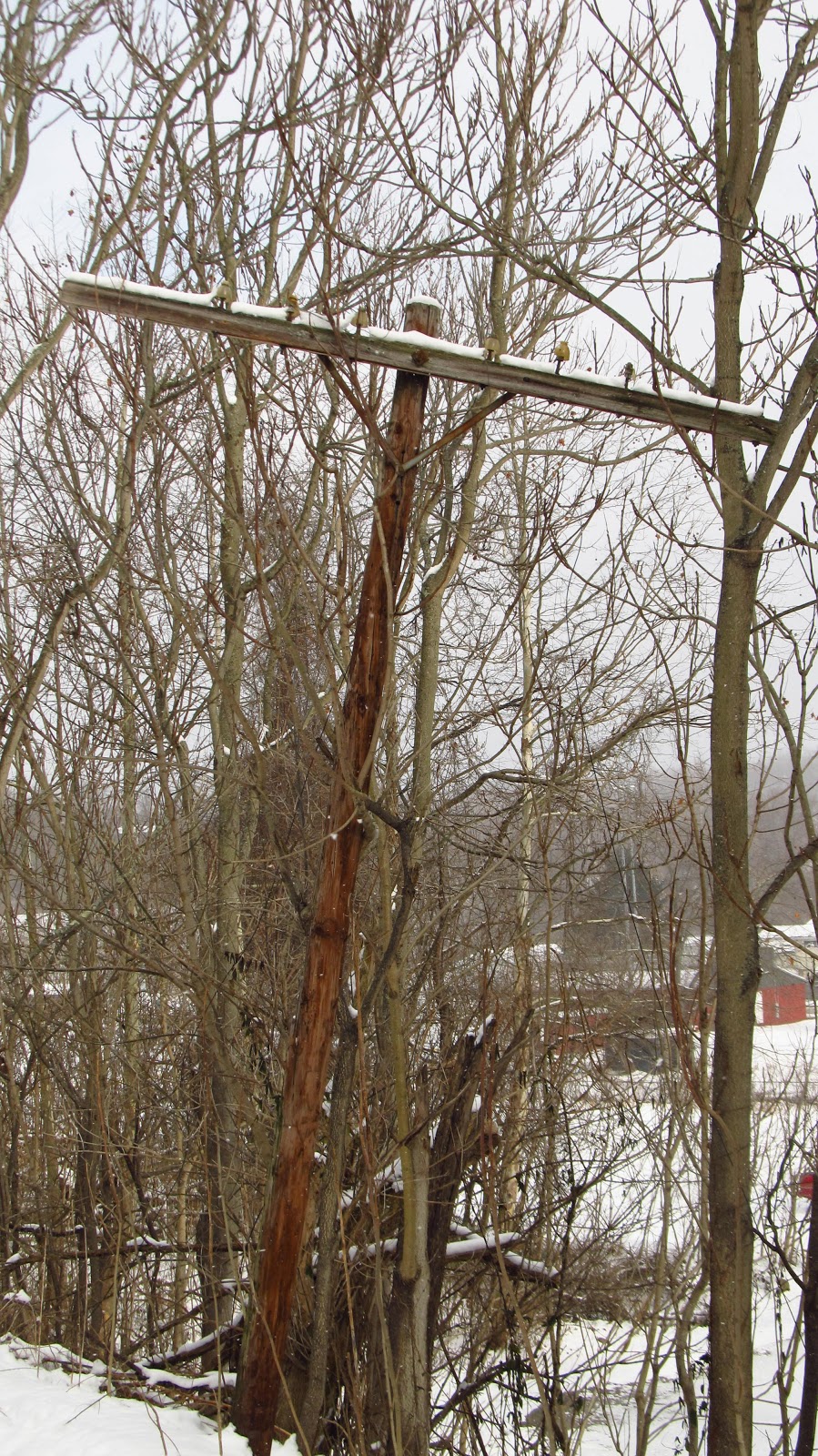 |
Old utility pole. |
 |
This is where the ovens start popping up. You can see the tops of a couple, then as they pull away from the tracks they become more pronounced. |
 |
Notice how the tracks are higher than the ovens. It should be the exact opposite of this. I think these tracks were raised and the ovens that were sitting closer to the tracks got buried. |
 |
Now the ovens are coming out! |
 |
These ovens are all in very poor condition. This adds to my theory that these ovens might not have been used during the war. |


 |
Looking up at the tracks. |


 |
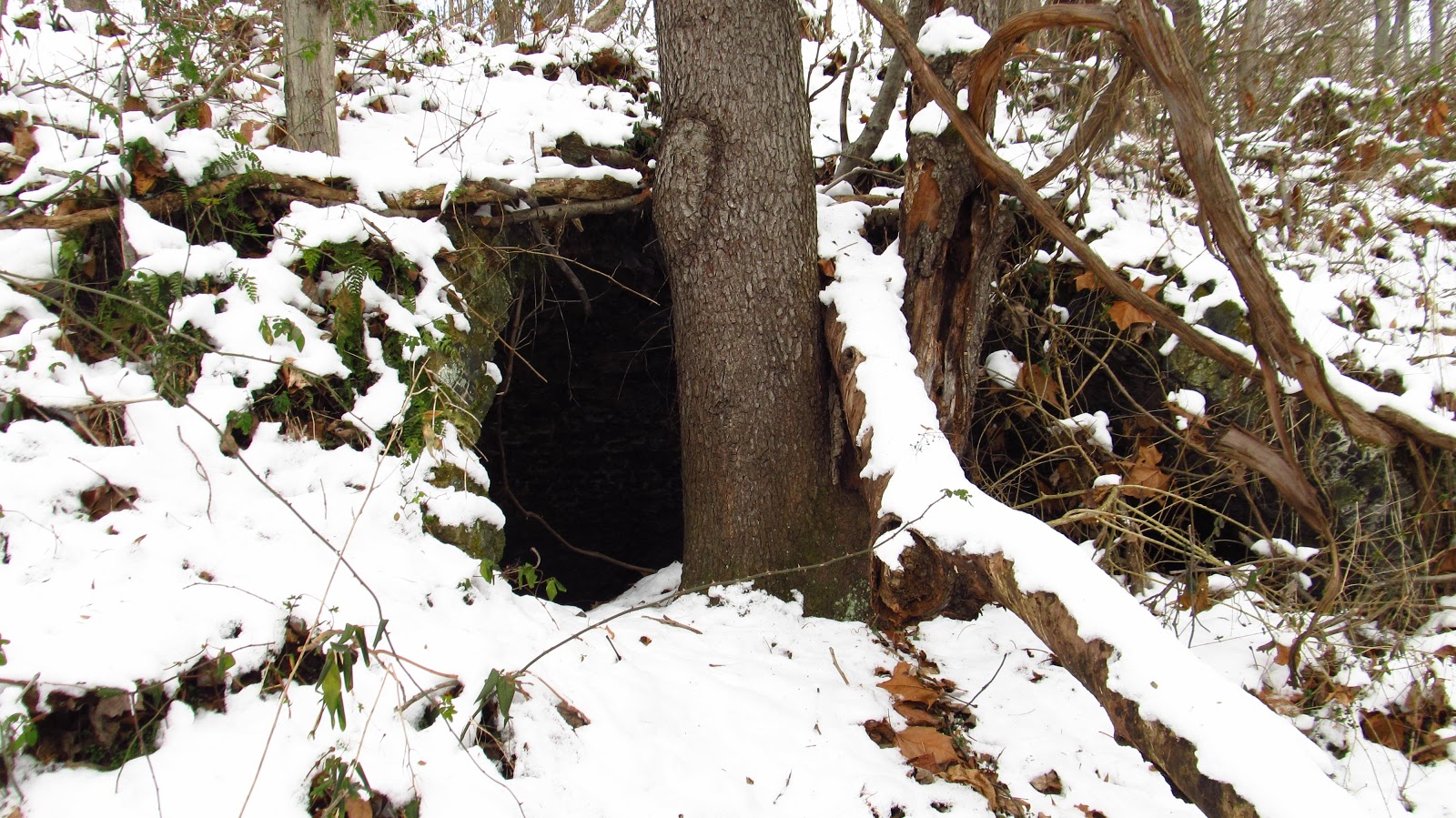
And this is where the ovens just come to an end. It seems like there should be more here than anywhere along the tracks but there isn't. |
 |
These tracks are sitting on a massive amount of fill. |

 |
Looking down at the ovens from the tracks. |


