These are some really old ovens. The American Coke Works began operating in 1873 by Samuel Warden and Co. in Stonersville (now Alverton). The 1876 Report Of Progress describes the operation in very good detail:

1876 Report Of Progress

1876 Report Of Progress
If we look at the 1876 map of Stonersville we can see Samuel Warden's operation.
 |
At the top left we can see Samuel Warden's Coke Works.Map courtesy of Historic Map Works. |
If we rotate the map so that the "north" arrow is facing north we can see more clearly the location of the coke works.

On the modern map we can see that the ovens are located between the railroad tracks and Stone Road.

The 1876 Report of Congress gives us some more information on the American Coke Works.
 |
1876 Report Of Congress |
The 1877 Industrial Statistics gives us a little more information.
 |
1877 Industrial Statistics |
1886 was the year that American Coke Works became known as Warden Coke Works. First the 1886 Census Reports gives us American.
 |
1886 Census Reports |
Also in 1886 The Butte Daily Miner has a report on the Coke Burners Strike. This is the first reference to the coke works as Warden.
 |
January 1, 1886 Butte Daily Miner |
This chart of ovens active in 1880 also names it Warden.
 |
Courtesy of the Library Of Congress |
We know the coke works were still in operation in 1898. After that there is no more mention of American or Warden Coke Works.
 |
| Connellsville Courier - October 14, 1898 |
So that seems to be the extent of the coke works. From the condition of what little remains at the site it is very easy to believe that nothing happened here since 1898. The most interesting part of this story is Samuel Warden himself. Samuel Warden was born August 8, 1822. According to the Braddock Trail Chapter of the Daughters of the American Revolution website, he was a farmer for most of his life and became involved in the coke industry in his later years.
 |
Samuel WardenPhoto courtesy of the Braddock Trail Chapter of the Daughters of the American Revolution. |
The coke business proved to be prosperous for Samuel and in 1886 he built a mansion on S. Church St. in Mount Pleasant. Warden would live here with his wife Margaret until his death in 1894. After Margaret died in 1904 the house was passed down through the family. In 1960 the Braddock Trail Chapter of the Daughters of the American Revolution were able to acquire the mansion. Today the DAR owns, operates and maintains the Warden house. They also offer tours by reservation and use the mansion as a meeting place and a genealogical library.
 |
The Samuel Warden Mansion. |
Now back to the coke ovens. Describing what remains of the ovens today as ruins is an understatement. Basically all that is left are traces of where ovens were. We were able to find some bricks and coke laying around but we were not able to find any intact ovens. There were two banks of ovens here. From what I can tell there were a total of 72 beehive coke ovens located at this plant.
 |
This is probably the best oven left. |
 |
Burned up brick, clay and soil that is found at nearly every coke oven site. |
 |
All that's really left is evidence that ovens existed. |
 |
A little bit of brick remaining. |
 |
Nothing but burned clay where an oven used to sit. |
 |
The back of an oven. |

 |
Evidence does remain of a bank of ovens. |


 |
A chunk of broken coke oven bricks. |
 |
Some bricks laying around. |


 |
The end of one of the banks. |
 |
A nice piece of block left from the front of the ovens. |
 |
The block had this carved into it. |
 |
The end of the other bank. |
 |
A wooden owl on top of the Warden house. |
 |
The side of the Warden house. |
 |
A smaller building on the property. Mary Jane thought maybe it was a summer kitchen. |
 |
The back of the house. |
 |
The other side of the house. |
 |
This was probably a stable. |
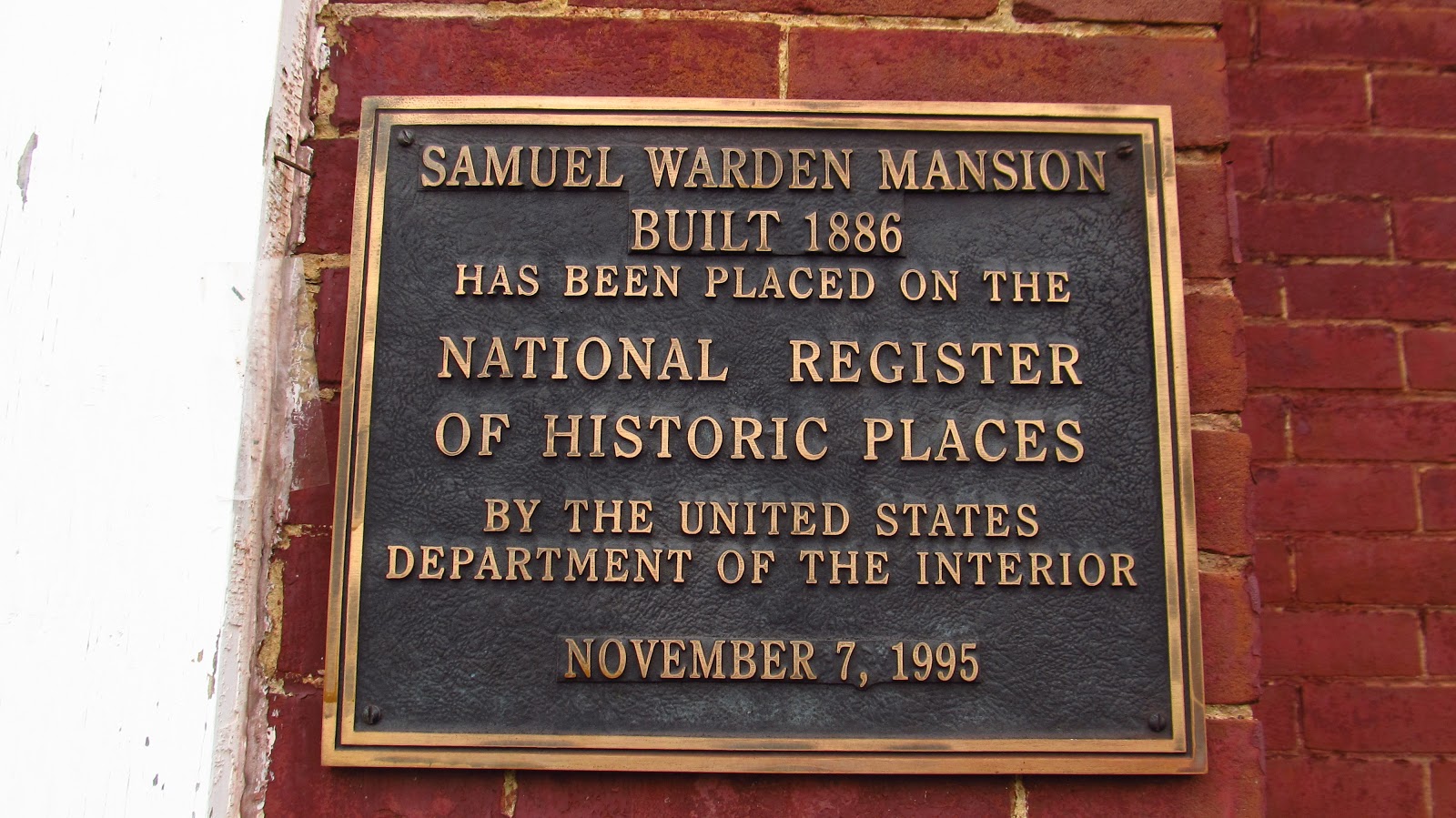 |
The plaque on the front of the house. |
 |
The DAR plaque. |


